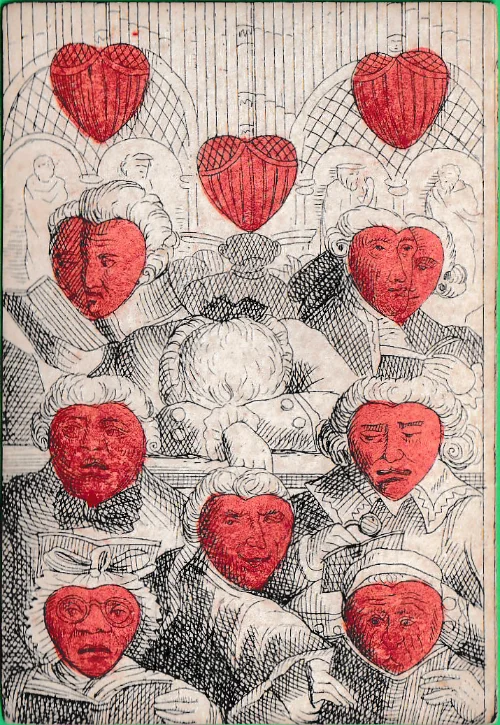
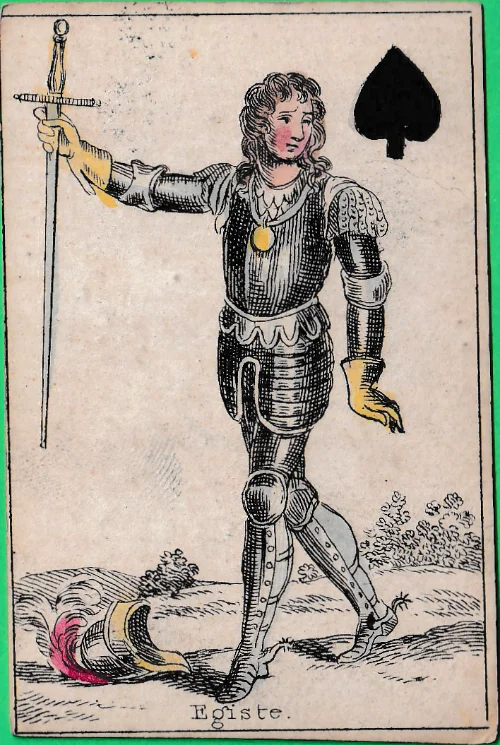
"Kaloprosopion Beautiful Disguise" 1828 Transformation Playing Cards
Description
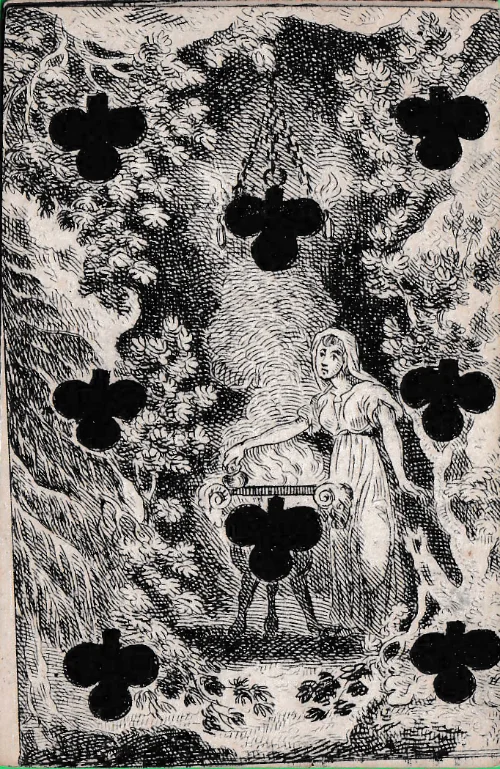
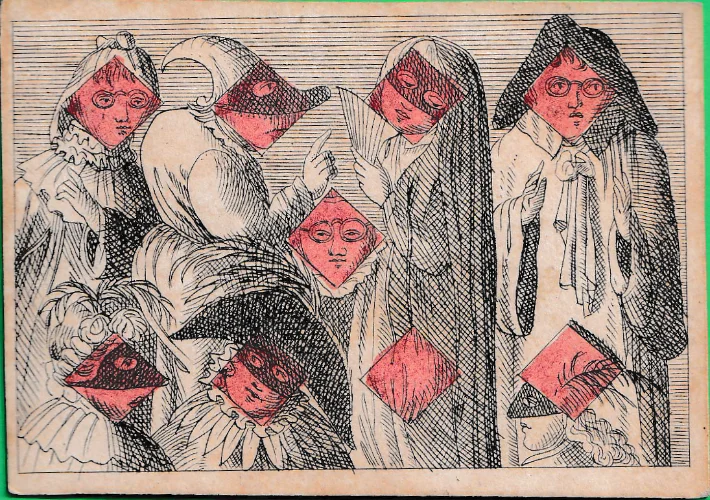
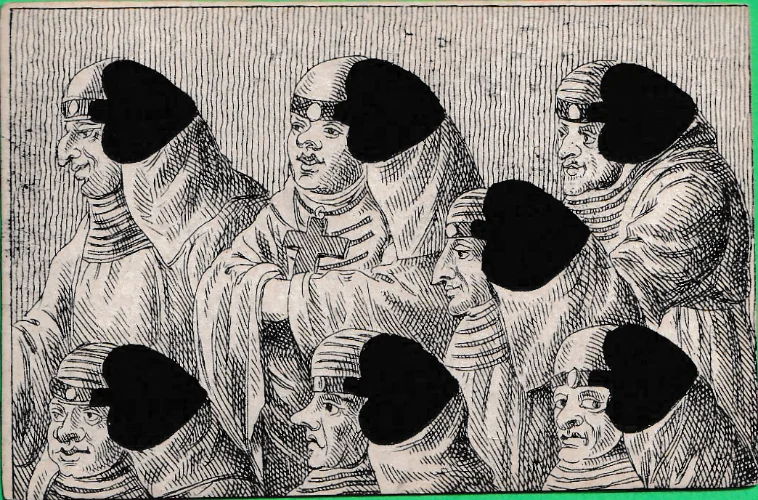
The challenge for a designer of transformation playing cards is originality and by 1828, only 23 years after the first full deck of transformation cards, it was a challenge that the English maker E Olivatte of 6 Leigh Str’, Burton Crescent, London could not rise to and so produced a ‘pirate deck’ of 52 card, 51 being designs copied from the earlier German decks.
The 51 cards came from the Cotta Almanacs of 1805 [11 cards], 1806 [25cards] and 1807 [15] plus one original design – the nine of hearts
Such was the excellent choices for inclusion that the pirate deck is now worth more than the originals from which it came!
CLICK ANY IMAGE FOR A LARGER IMPRESSION
History
This deck was published in two edition.
It is said that the 1828 deck had the court cards without written indices and the 1829 added them but is this true as I have yet to find an Ace of Clubs dated 1828 so the additions could have been made at any time.
I would think the additions were made quite early on as it is not always easy to distinguish between the Jacks and the Kings making the pack unplayable.
CLICK ANY IMAGE FOR A LARGER IMPRESSION
Duty Ace It is interesting that whilst England makers of standard pattern cards were obliged to have their name on the Ace of Spades this maker followed the pattern on the earlier German Cottas and had his makers inscription on the Ace of Clubs – this is not a revenue ace.
The question is how did he avoided complying with a duty ace card – perhaps it was initially marketed as a game more than a pack of cards. The description in a trade list [ see references below ] details a Duty Ace by Reynolds & Co
This Deck and Condition
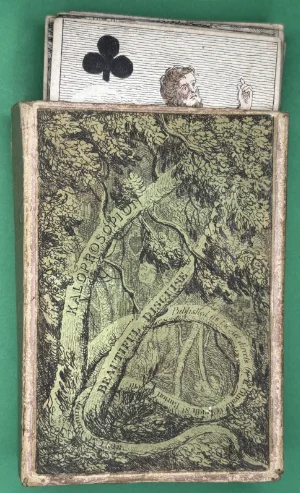
This is a complete pack of 52 cards with coloured backs. The three club suit courts are slightly larger because they have wider border. The original box is included which was issued without a lid.
This pack has been well played with but has no tares or missing corners. All cards have been scanned.
It becomes obvious when you look at the cards that the producer was not a regular playing card maker. The way the cards have been cut is almost childish. We have seen this before with a hand cut Fortune Telling pack.
This is a pack that has been made up over the course of it’s lifetime – this was a common practice given the price of playing cards and would be less noticeable had the backs been plain.
The backs are a mixture of green and greenish blue. This could be genuine as the packs I have examined do also have a mixture of colours
It again is date 1828 with named courts but comes with a booklet inscribed London: Published January 1829 by N.E. Olivatti & by Reynolds & Sons, 7, Breams Buildings,
Chancery Lane and the additional Duty Card with just Reynolds & Son
They conjecture that Reynolds took them over but I think it’s more likely that the Revenue caught up with them and they had Reynolds supply them with a duty ace to make the pack legal. The British Museum list their holdings at
Coloured cards throughout dated 1828 with named court cards
The Cary Collection list a holding dated 1828 ref: ENG 147 again with named courts.
Albert Fields book on transformations cites two edition though I think he was confused with the date printed in the booklet and I have yet to see an Ace of Clubs dated 1829. His book also had some of the court cards named incorrectly.