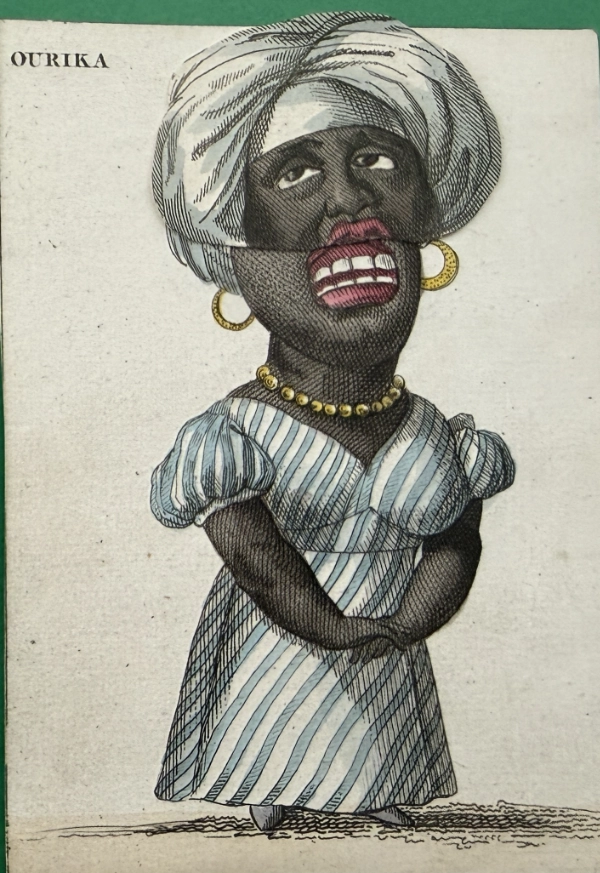
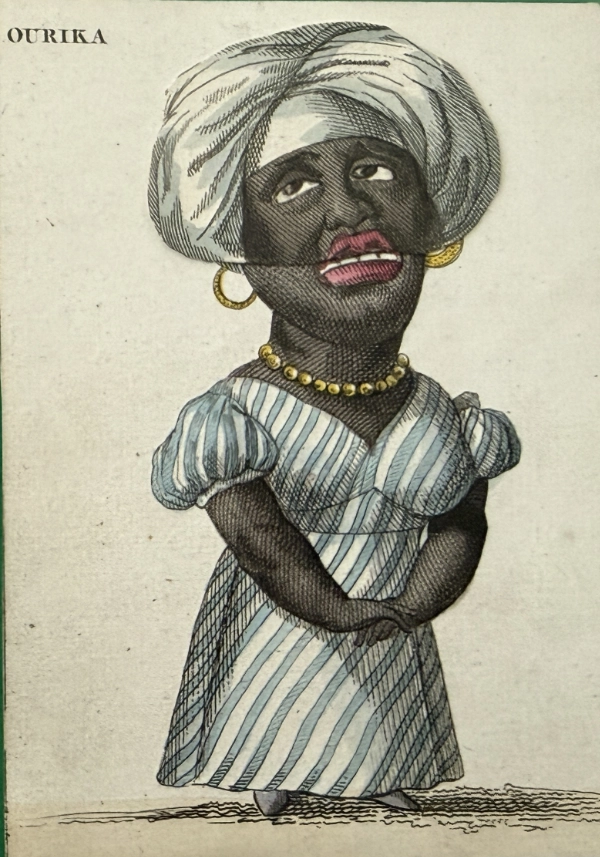
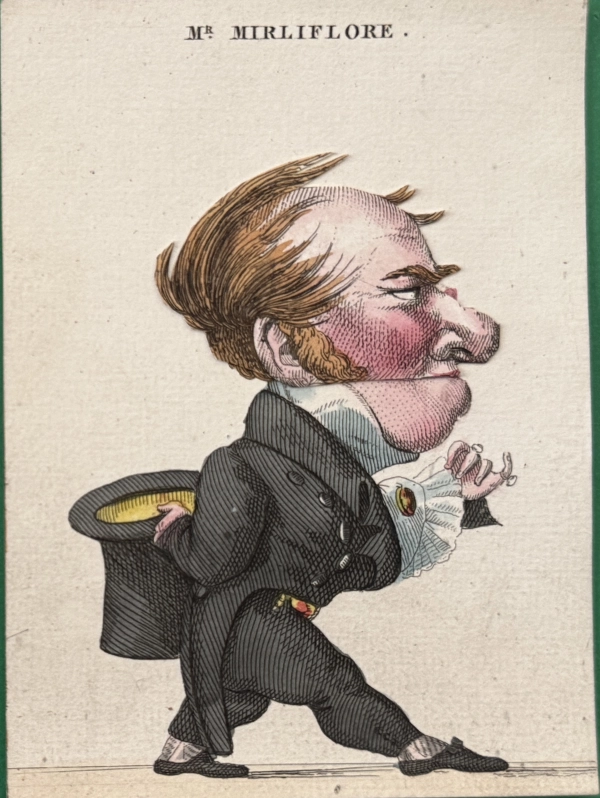
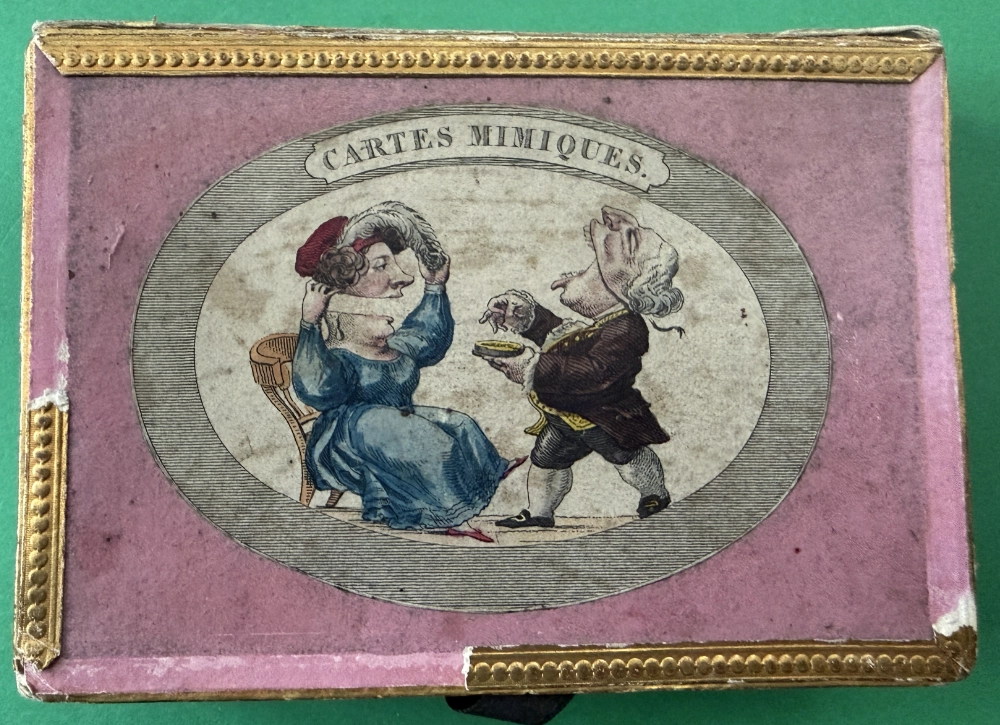
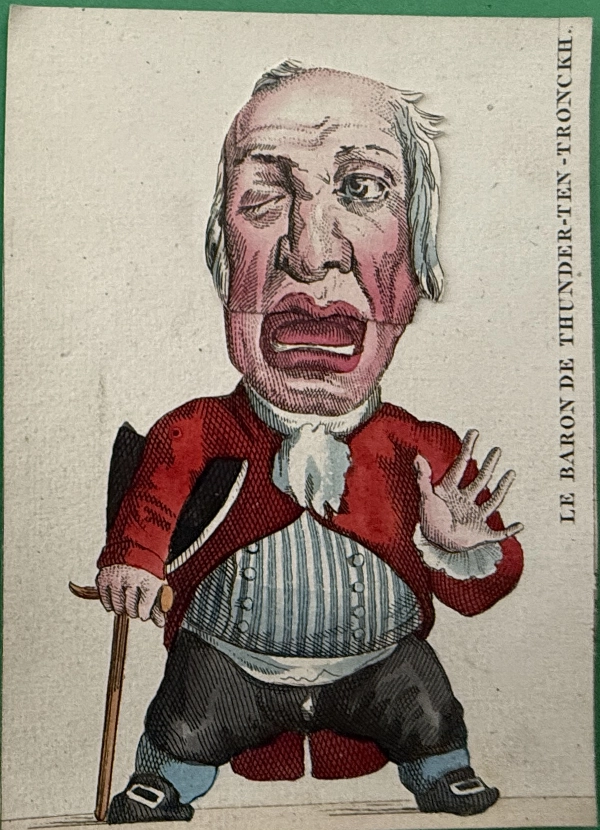
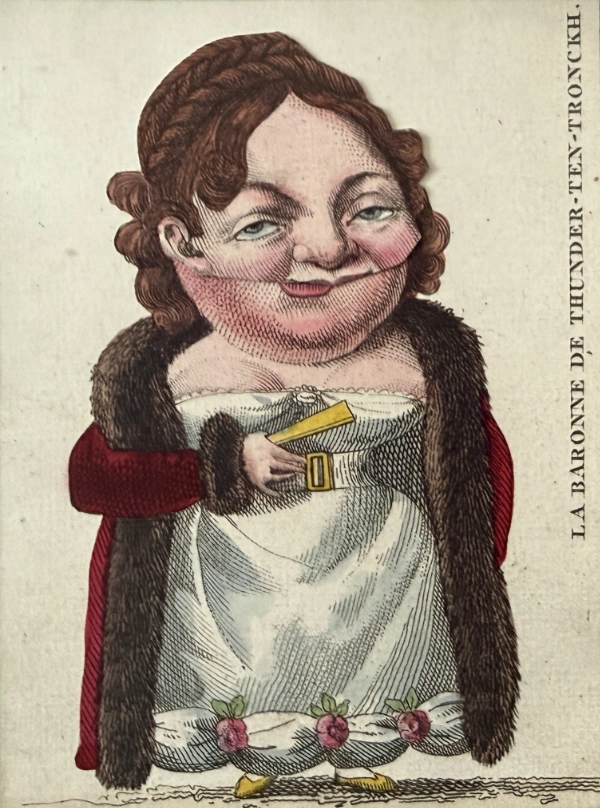
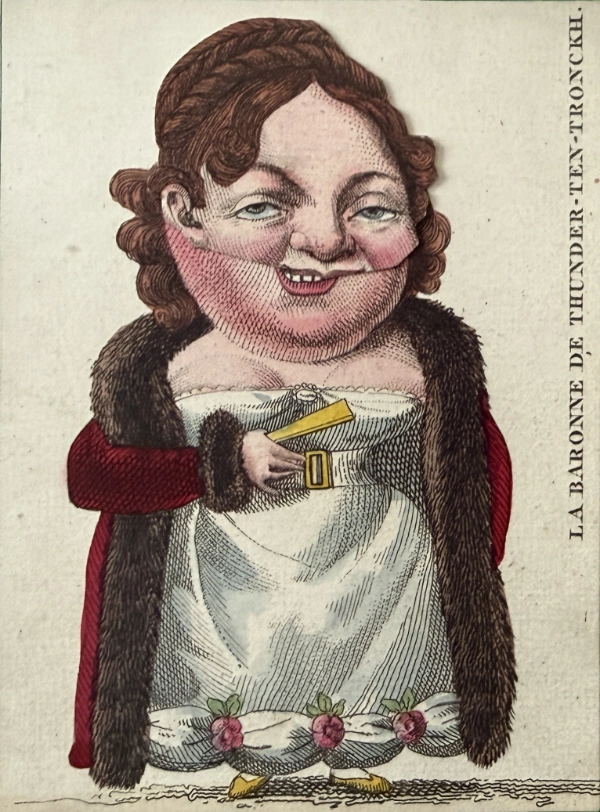
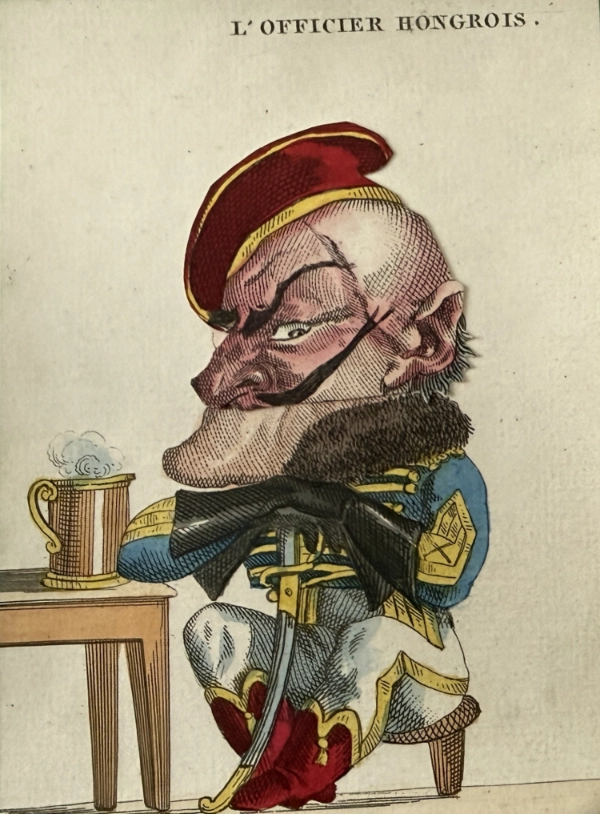
Cartes Mimiques. Paris, publisher unidentified, circa 1824–25 [provisional dating]. Complete set of 20 hand-coloured mechanical caricature cards with sliding tabs, in its titled box. The only complete example known to the owner
A particularly strong connection: heroine of Claire de Duras’s Ourika, privately printed in 1823 and publicly published in 1824. The story concerns a Senegalese girl raised in French aristocratic society and her experience of racial exclusion. It was inspired by a real Ourika associated with the Beauvau household.
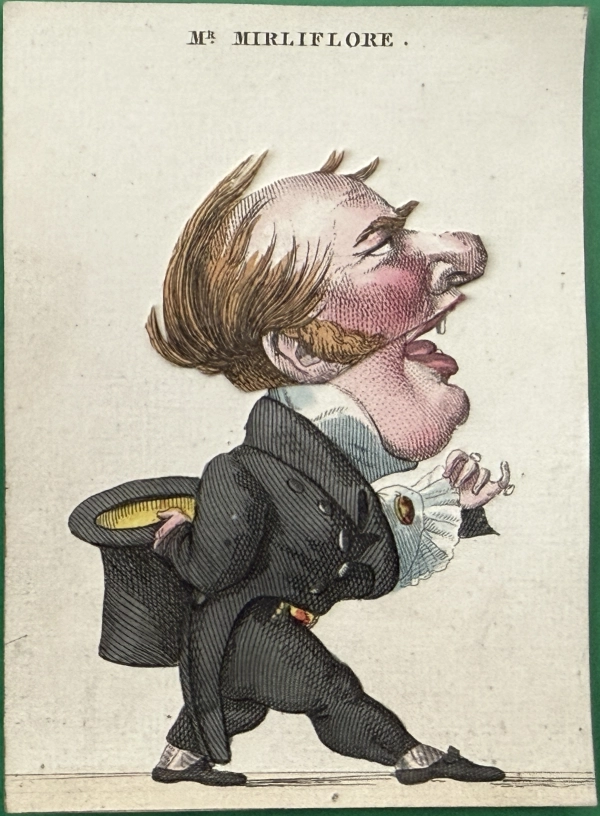
A recognised comic social type: a self-satisfied fashionable young man—a fop or beau. “Monsieur Mirliflore” can therefore be a humorous invented name rather than a specific individual. The term appears in historical French dictionaries.
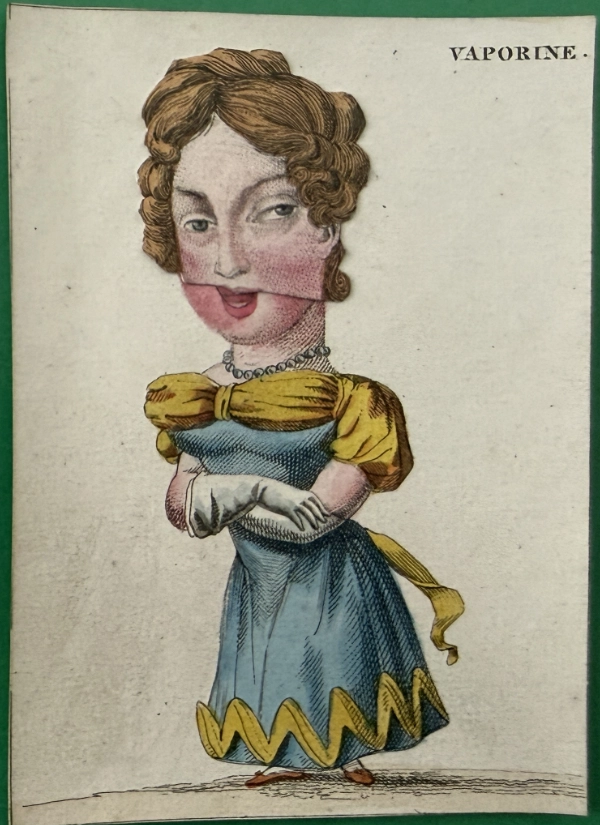
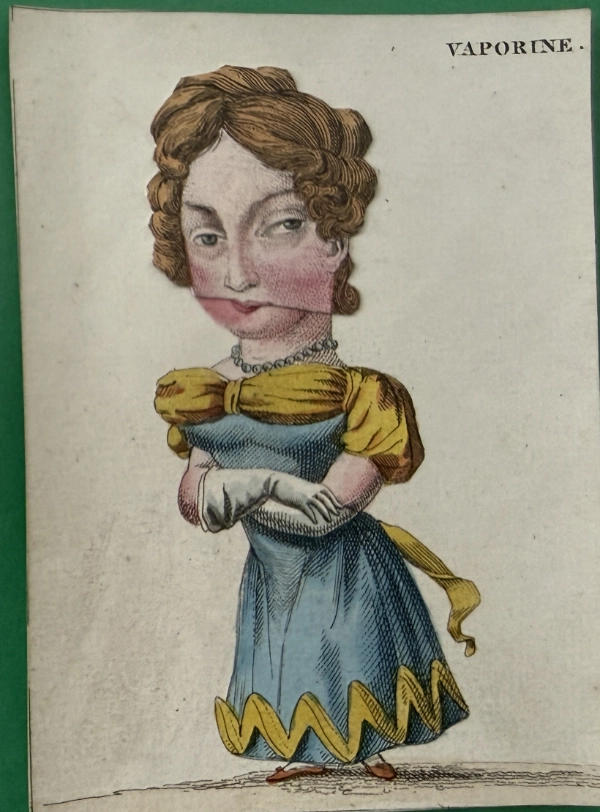
Unresolved as a specific character. The name does occur in nineteenth-century comic writing: Les Femmes qui font des scènes contains “Vaporine” alongside jokes about being évaporée and vapeurs. That suggests a comic name, but does not establish the source of your figure.
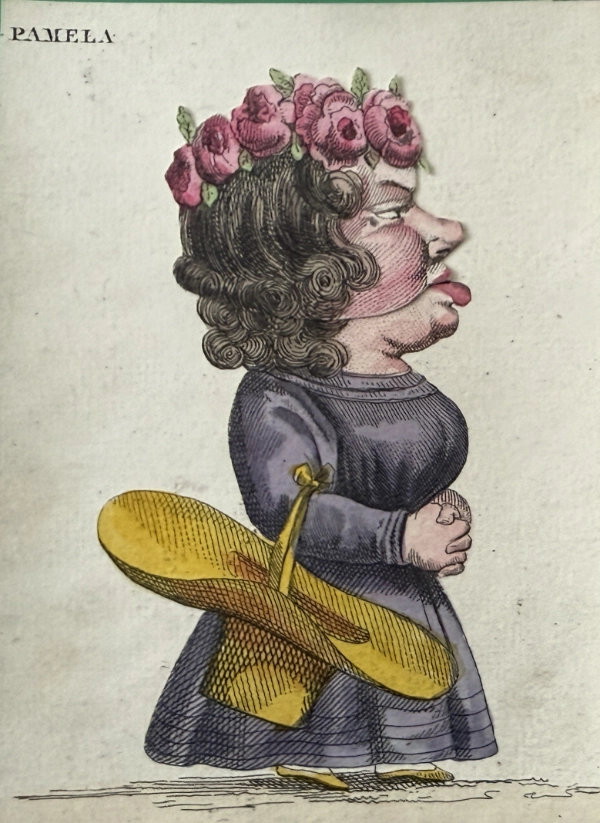
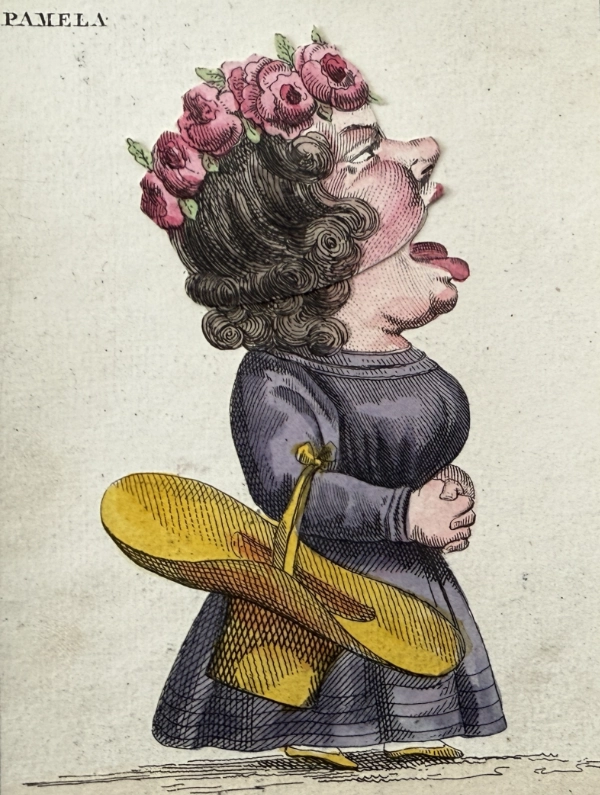
Strong literary candidate:Pamela Andrews, heroine of Samuel Richardson’s Pamela; or, Virtue Rewarded (1740). Its European popularity led to stage adaptations, including Goldoni’s Pamela (1750). The name alone cannot determine which version your image represents
CLICK FOR A LARGER IMAGE
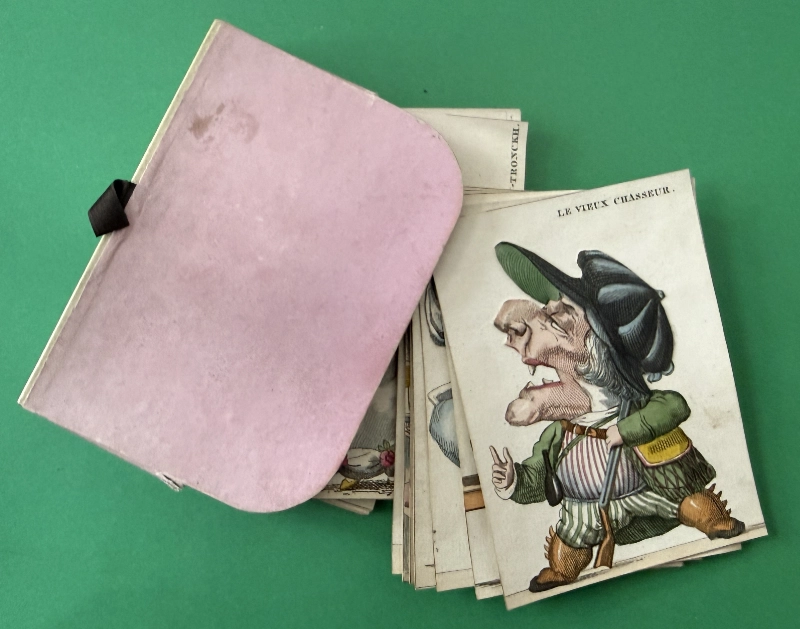
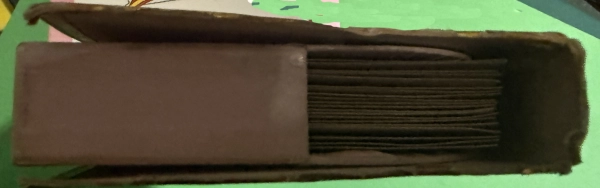
Box has some issues as seen – we believed the box was originally secured with a ribbon – and the inserts were housed in a protective jacket, present.
The Candide, Tartuffe, Pamela and Don Quixote connections all fit a set made around this period.
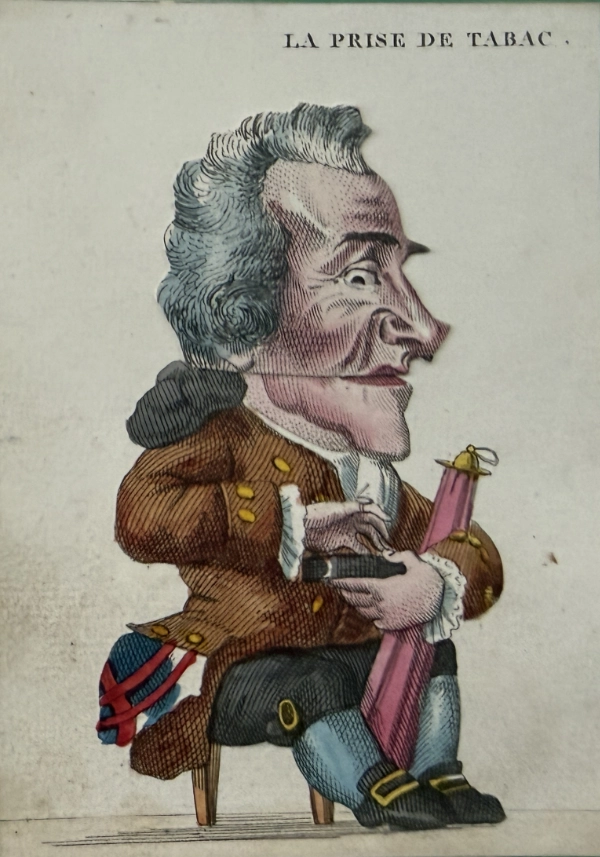
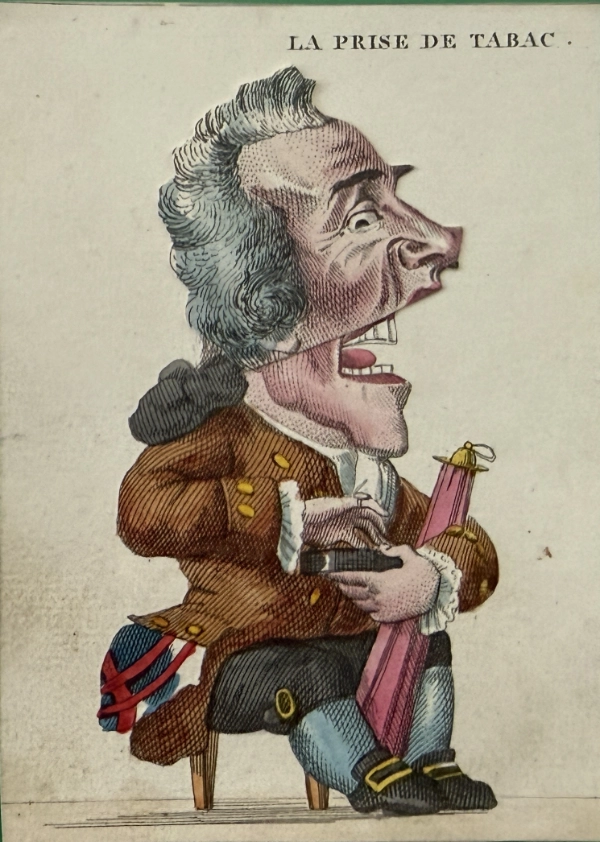
The generic captions—Le Gastronome, Le Poupard, La Prise de tabac—also make sense as subjects for moving caricatures.
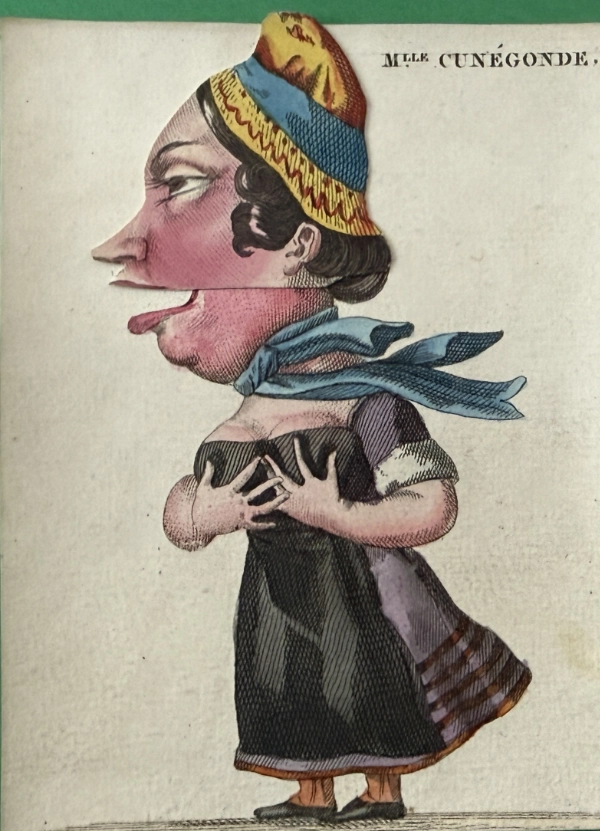
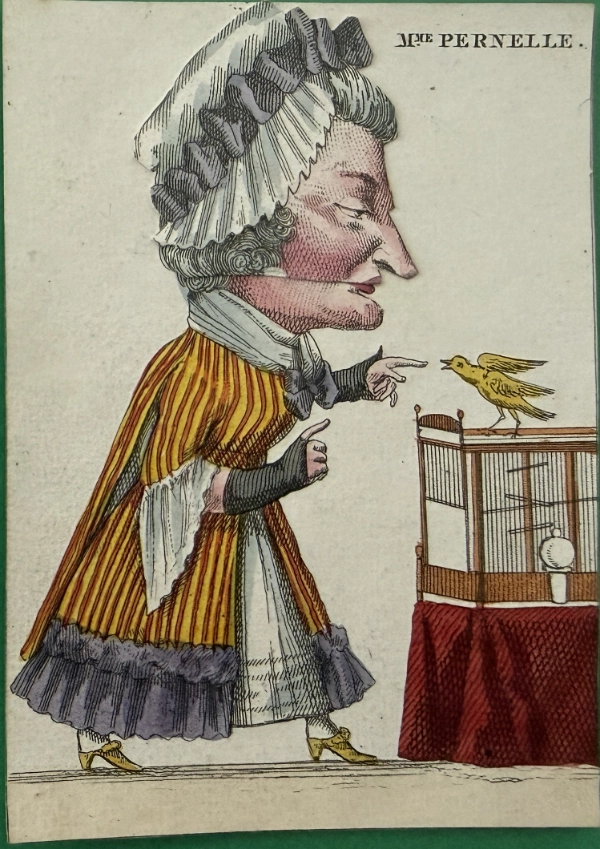
All characters in good condition, tabs all working.
No obvious repairs anywhere.
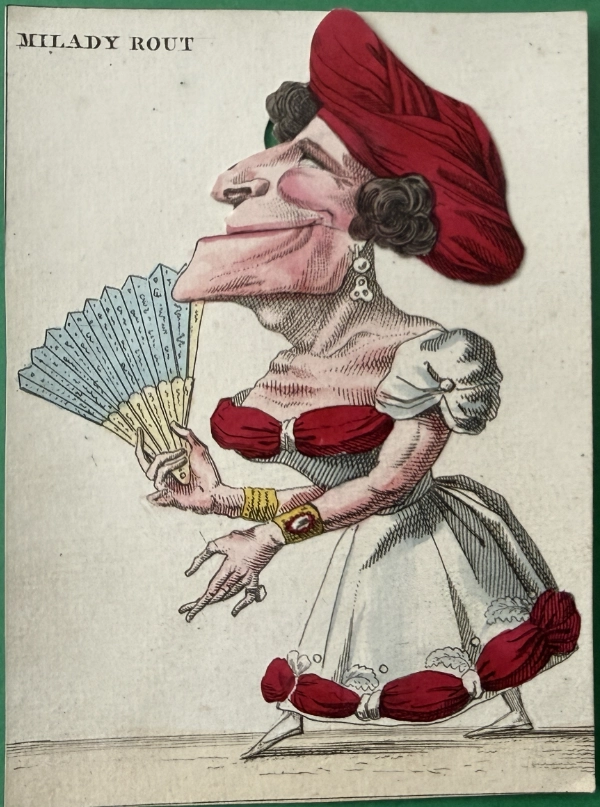
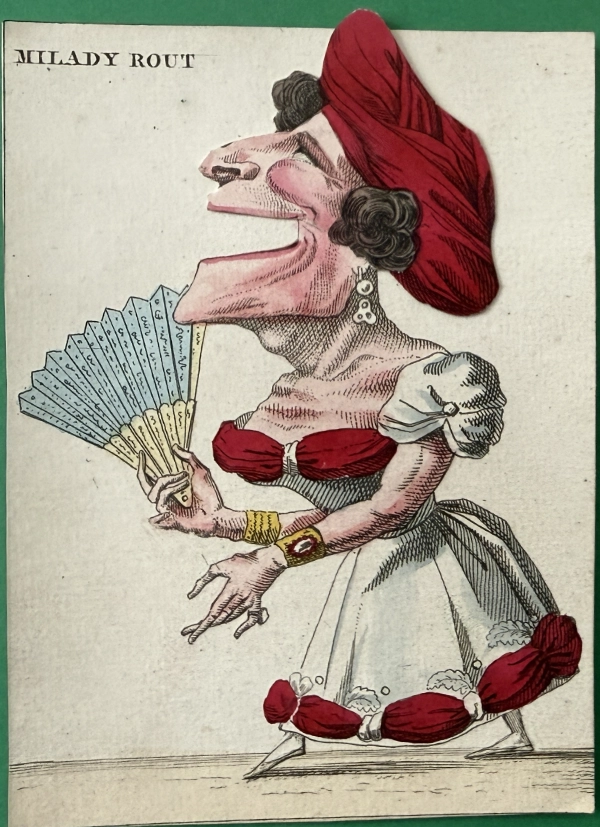
The spelling ROUT is confirmed. There is a promising wordplay: rout meant a fashionable gathering or reception, borrowed from English. Her fan, jewellery and elaborate dress fit a comic society lady—perhaps effectively “Lady Party.” This is an interpretation, not an identification with a documented person.
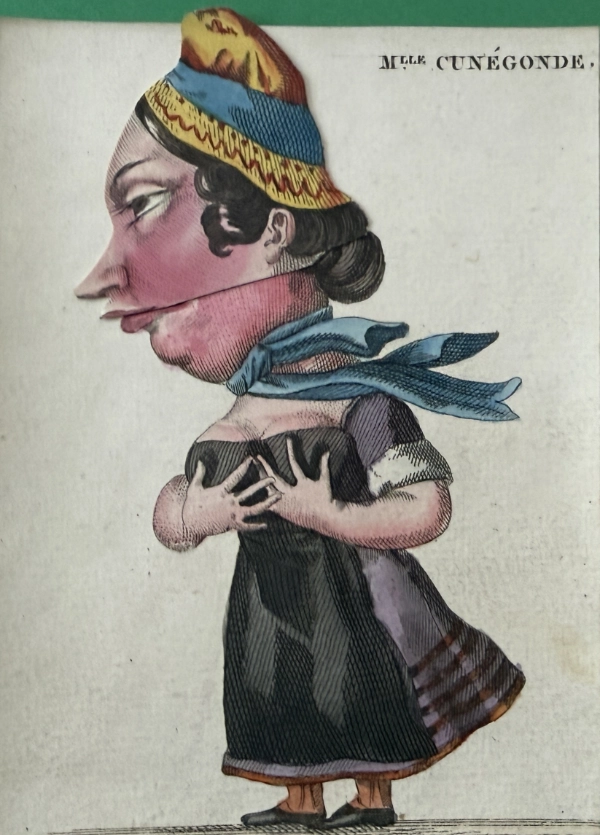
The lettering clearly reads Mademoiselle Cunégonde. Together with the Baron and Baroness, this securely establishes the Candide connection.
Lorem ipsum dolor sit amet, consectetur adipiscing elit. Ut elit tellus, luctus nec ullamcorper mattis, pulvinar dapibus leo.
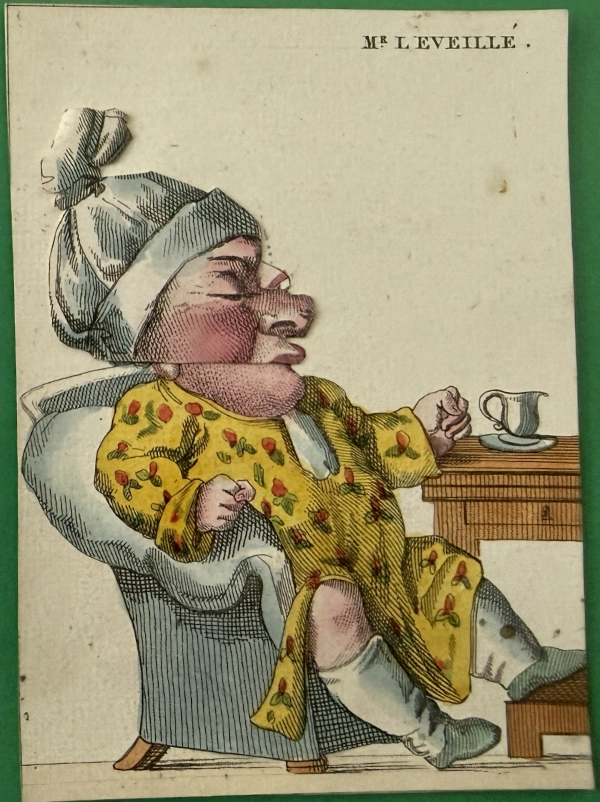
The caption is Monsieur L’Éveillé, not “Me Leveillé.” His closed eyes, nightcap, dressing gown and yawning mouth suggest an ironic name: “Mr Wide-awake.” This now looks more like a comic sleeper than the theatrical servant I previously mentioned.
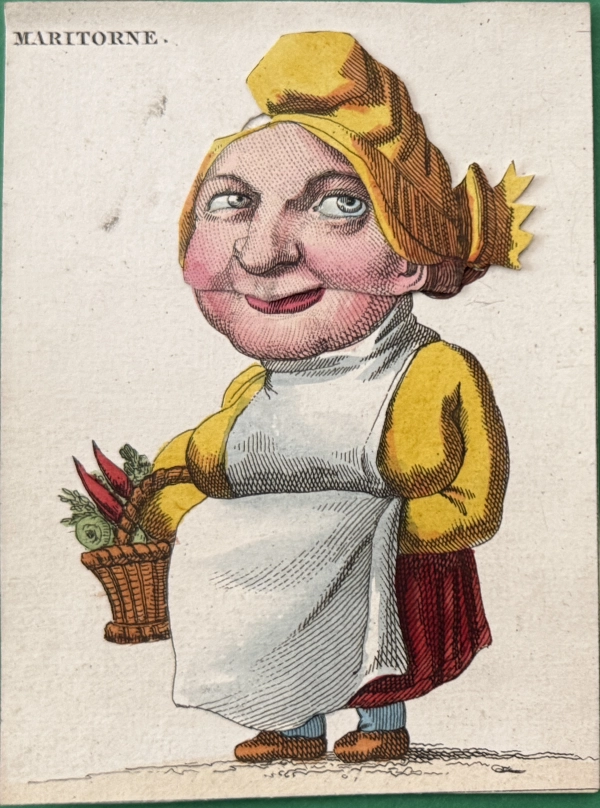
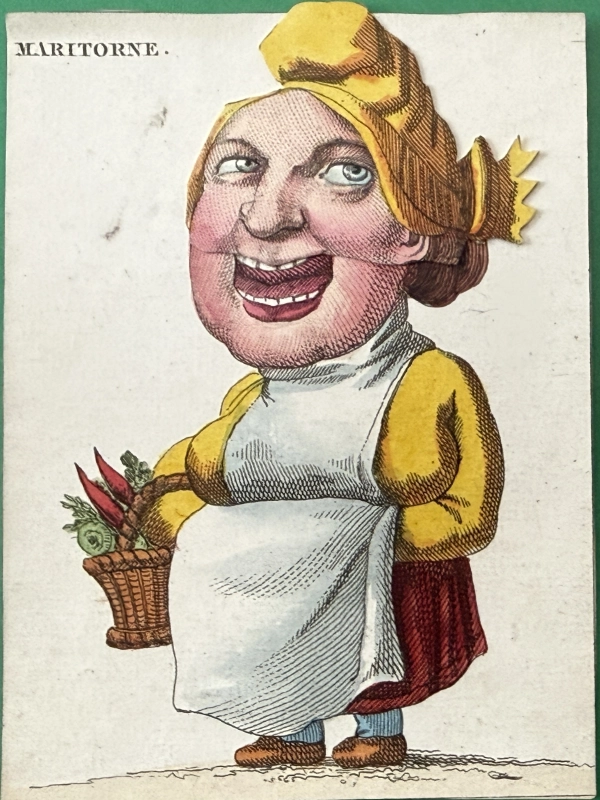
Her apron and provisions fit a servant or working woman. The literary association with Cervantes remains strong, although the picture alone cannot distinguish his character from a generalised servant type.
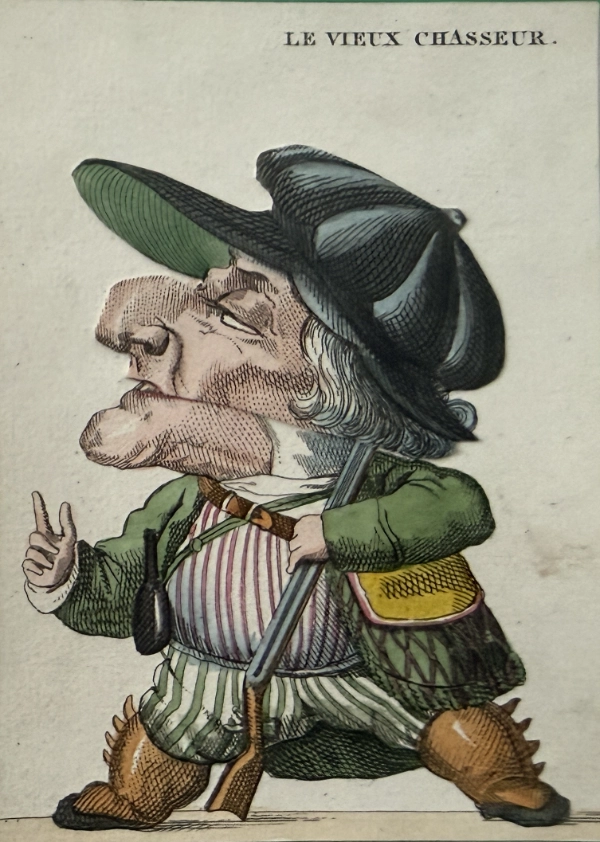
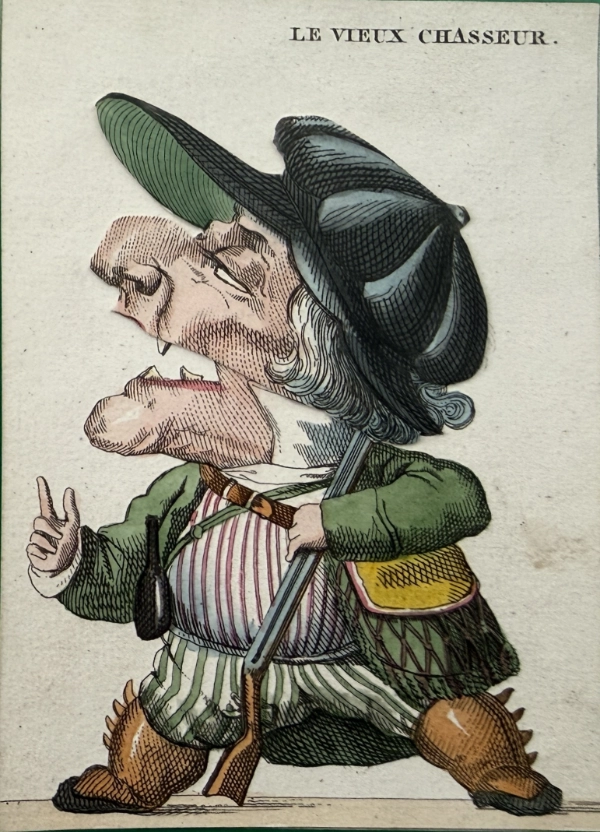
“The old hunter.” Probably a descriptive character type; no particular person or literary role securely established.
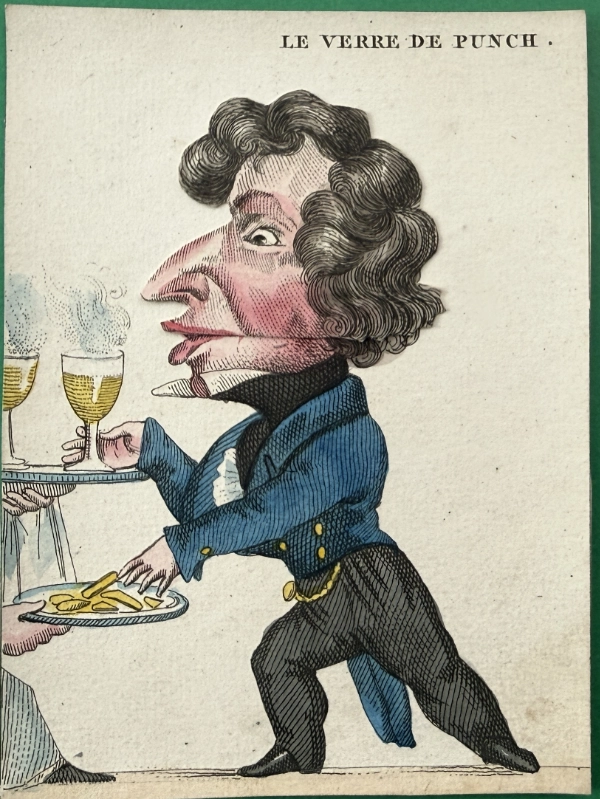
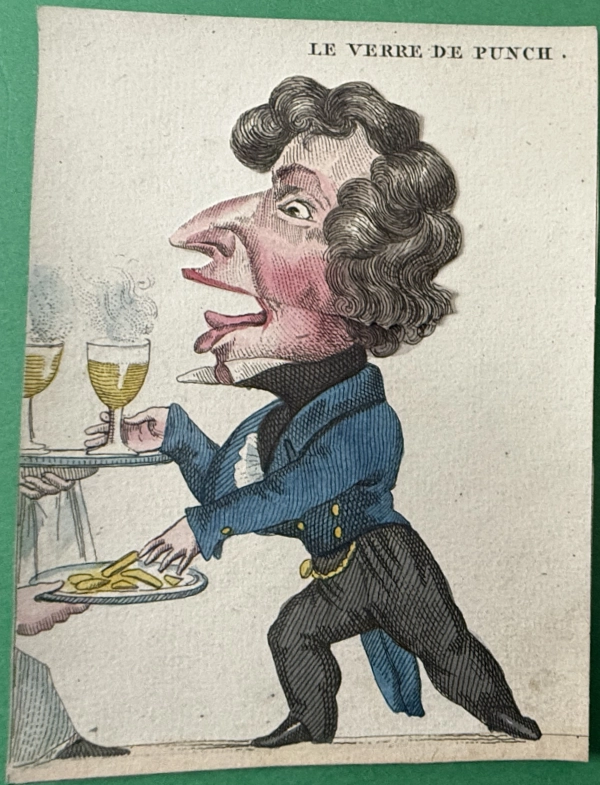
“The glass of punch.” This reads as a scene title, rather than a character’s name. No particular historical connection established.
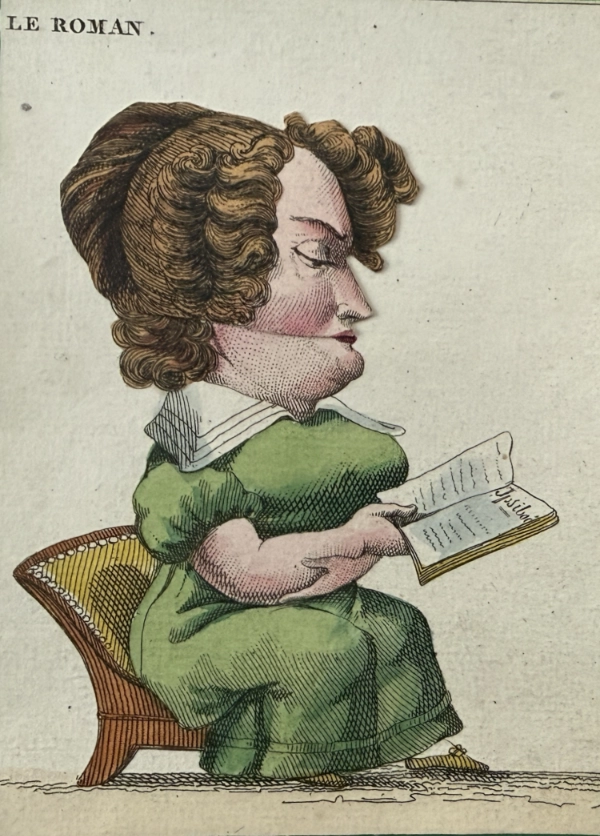
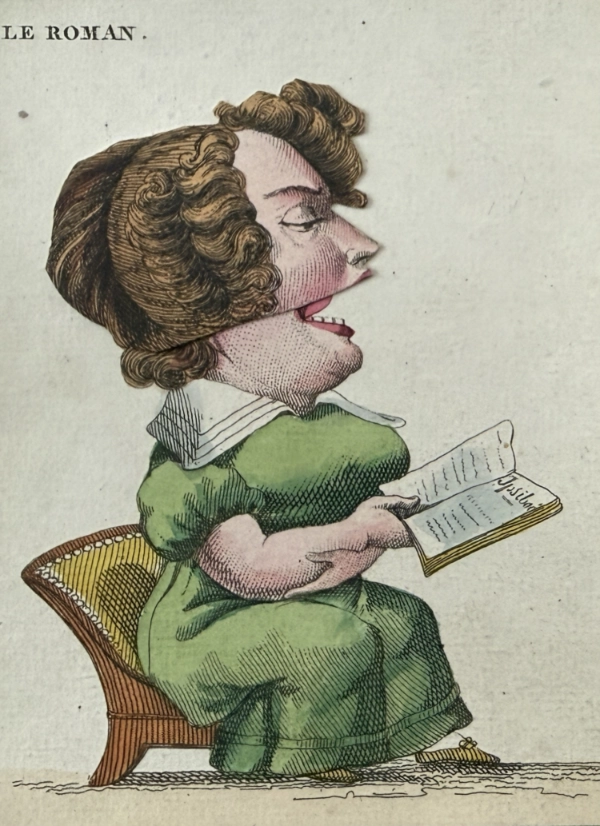
“The Novel”: the woman is reading a book. Its visible title appears to begin “Ipsibo…”, possibly Ipsiboé. That lettering deserves closer examination before identifying the book.
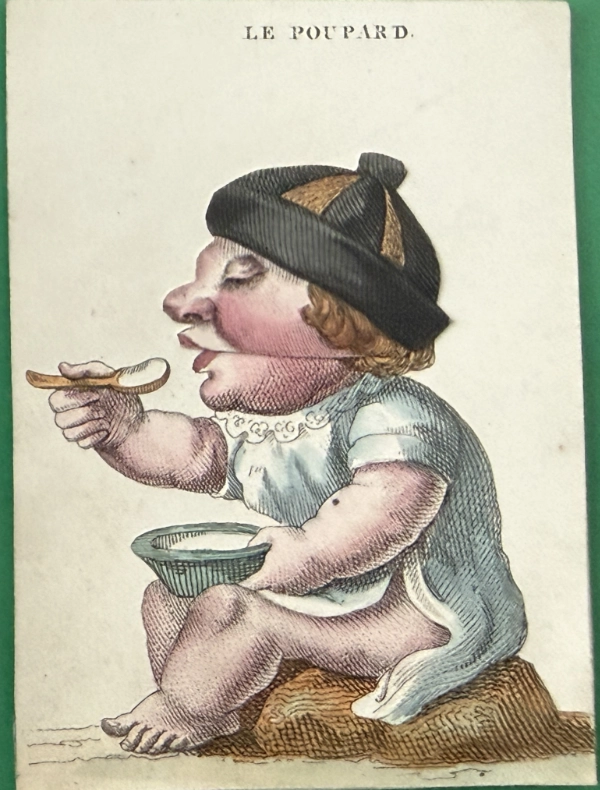
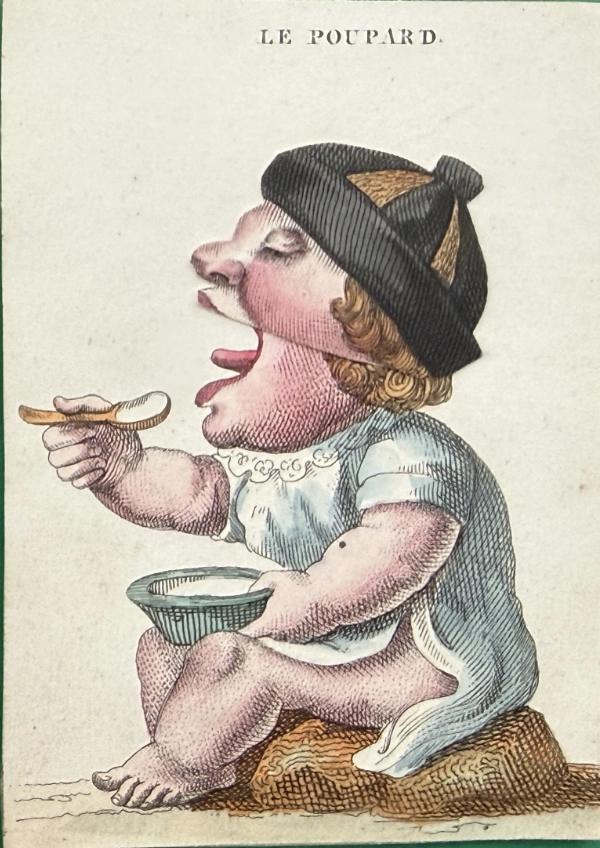
Clearly a small child eating from a bowl, confirming the ordinary meaning of the caption.
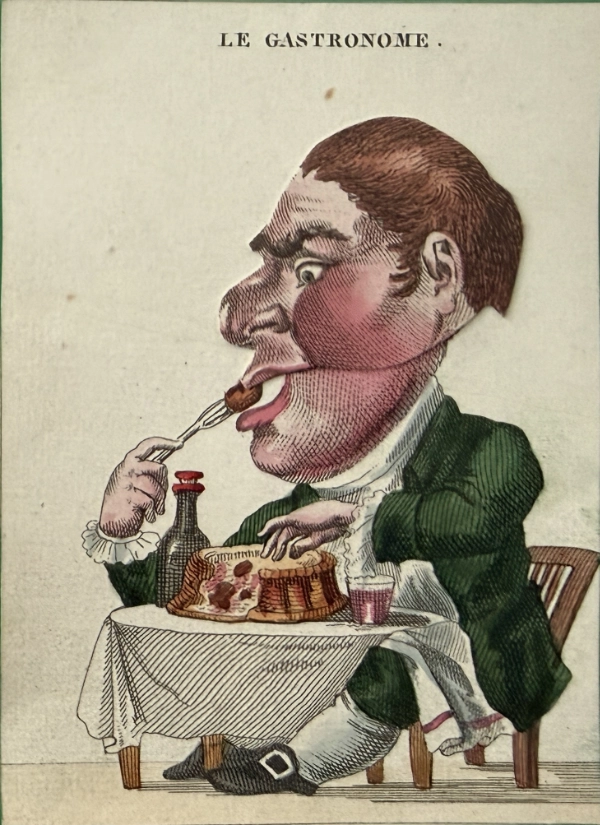
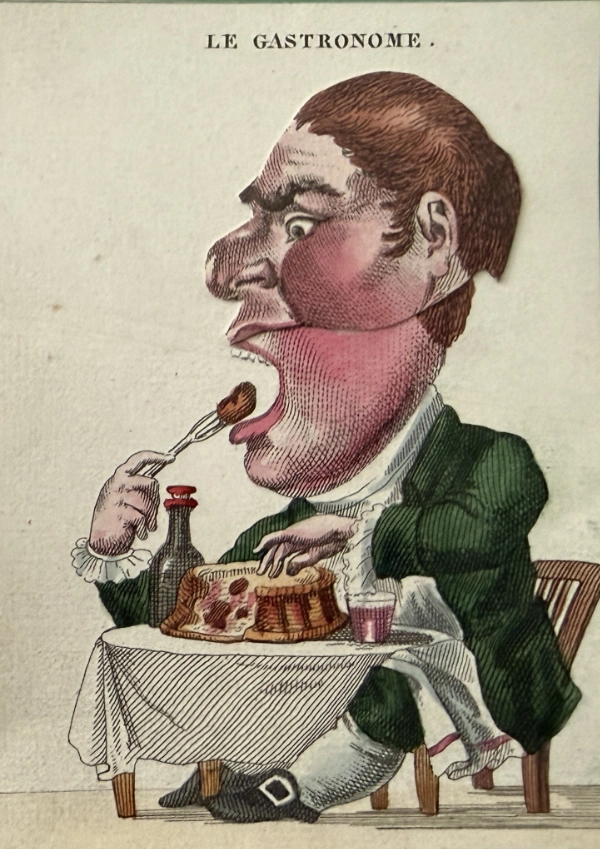
“The gourmet” or “the lover of fine food.” Probably a comic social type. The caption does not justify identifying him as a famous gastronome.
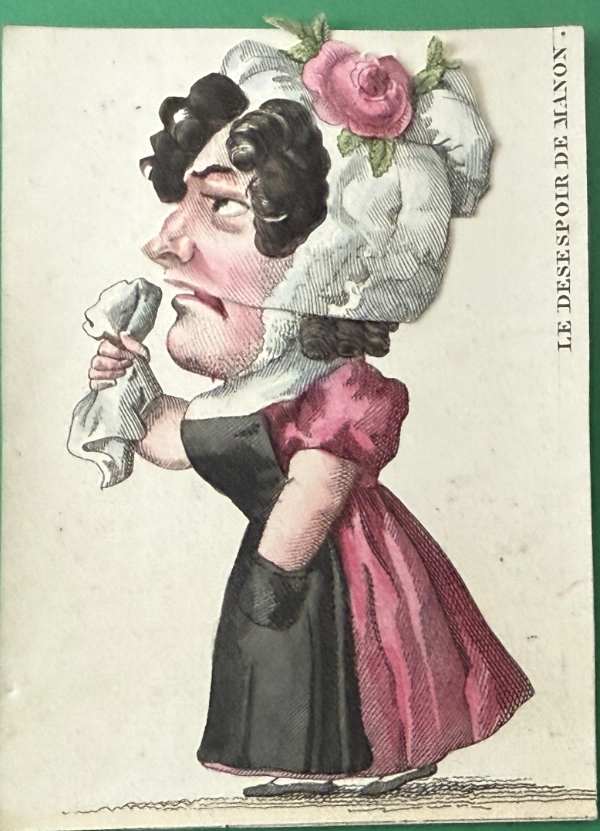
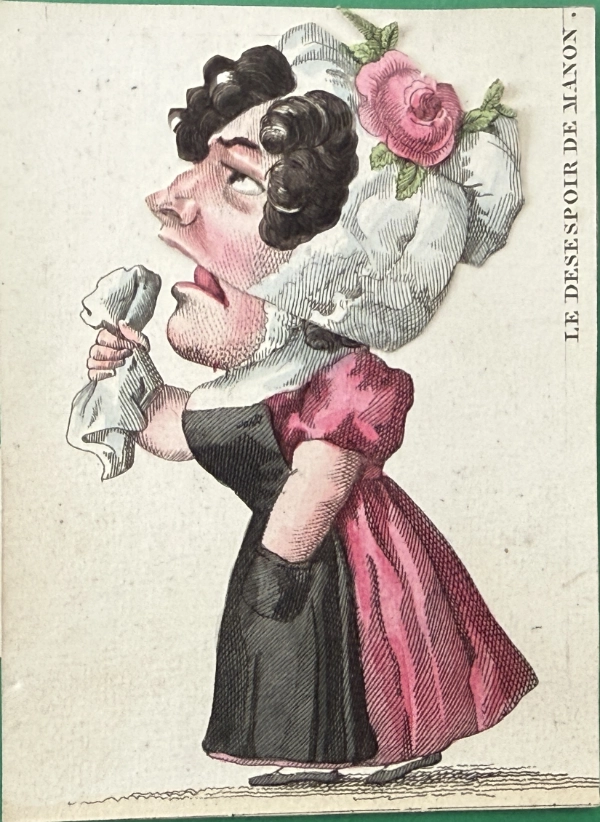
A woman weeping into a handkerchief. The picture does not securely establish Manon Lescaut; it could be a comic sentimental scene using the common name Manon.
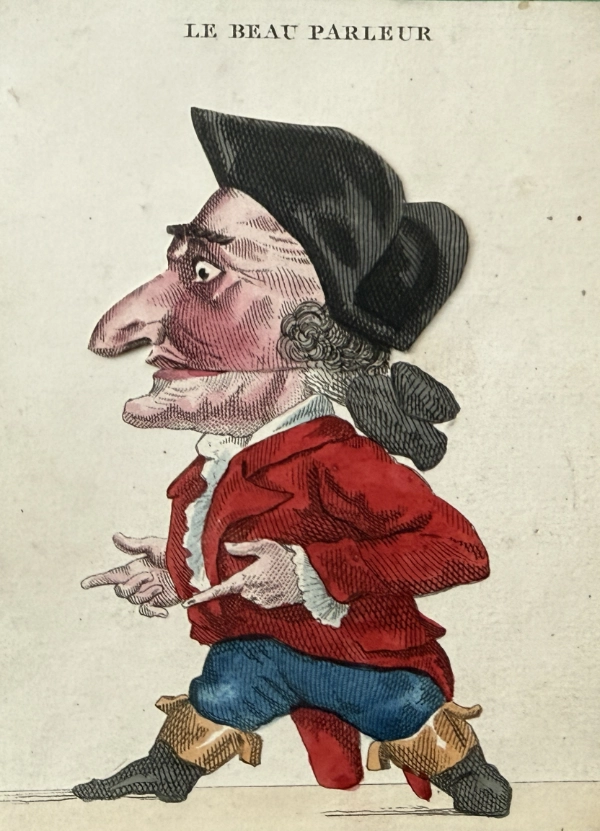
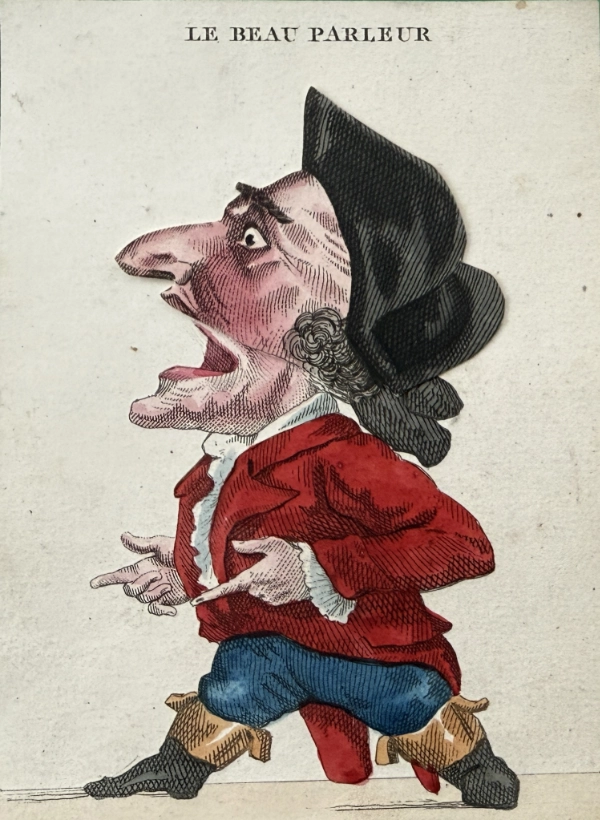
The caption reads LE BEAU PARLEUR, His expansive gesture suits “the smooth talker.”
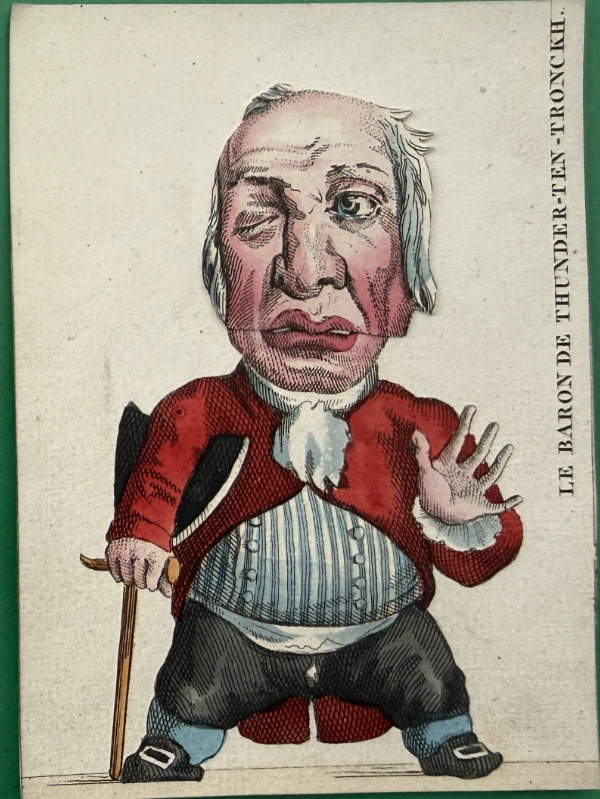
Definite connection to Candide (1759). The title can refer to Cunégonde’s father or, later in the story, her brother; the picture should establish which
A further refernce to Candite (1759)
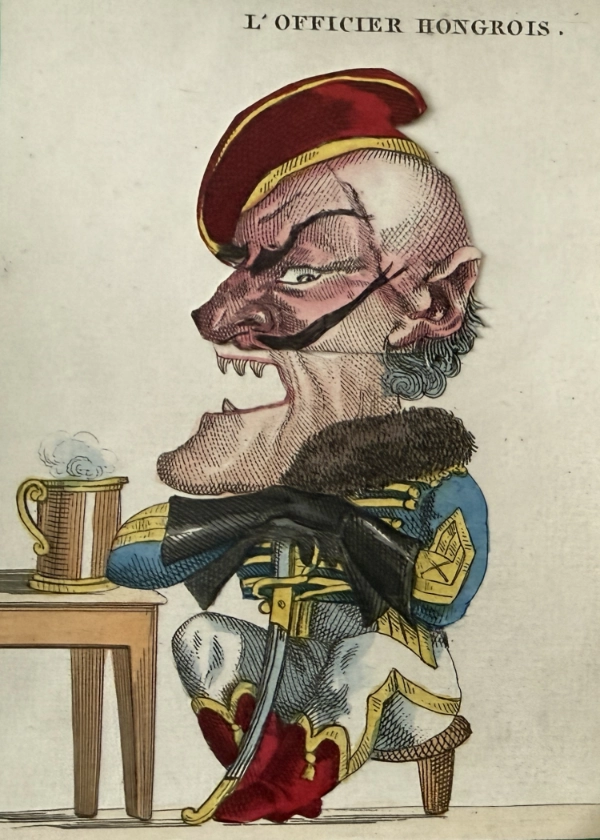
“The Hungarian officer.” A military description rather than a personal name.
“The pinch of snuff” or “taking snuff.” A scene or action rather than a named person.